
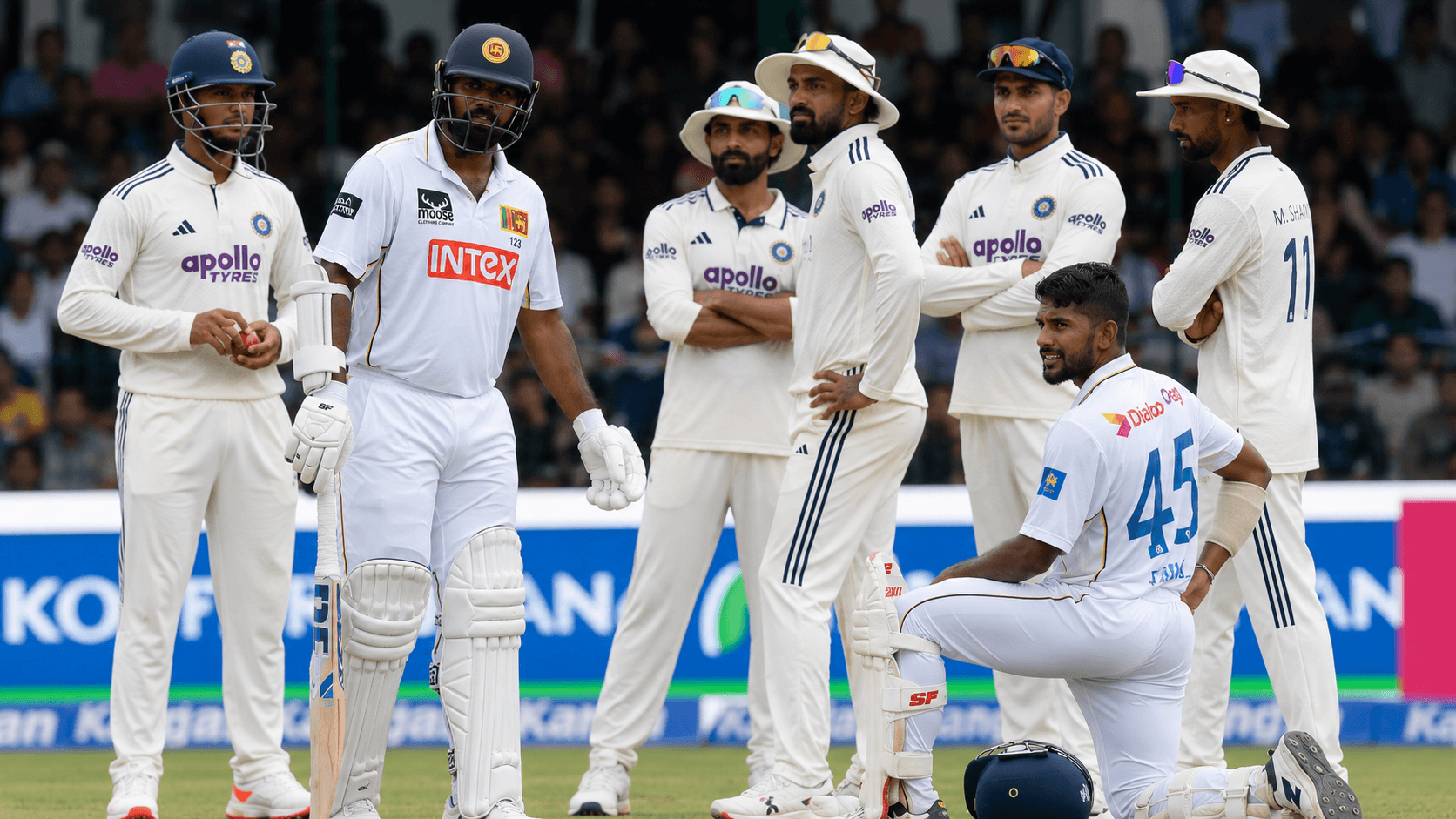
India expected Day 3 of the Colombo Test to be about tightening the pressure on Sri Lanka. Instead, the hosts showed plenty of resistance and made India work for every wicket.
At the end of the day, India had taken six wickets, but Sri Lanka had done enough with the bat to keep the contest alive. The weather then had the final say, with rain and fading light bringing the day’s play to an early close.
Sri Lanka Refuse to Fold
India had finished Day 2 in a strong position after dismissing two Sri Lankan batters soon after declaring. With the new ball available on the third morning, another quick collapse looked possible.
Prasidh Krishna gave India exactly the start they wanted. After taking a wicket late on Day 2, the tall pacer struck again early on Day 3. His ability to extract extra bounce made him particularly difficult to handle on the Colombo surface.
However, Sri Lanka refused to allow India to run through the batting order.
The home side repeatedly built partnerships that forced India’s bowlers to stay patient. India created opportunities and broke through at regular intervals, but every time it appeared that Sri Lanka might lose control, another batter managed to settle down.
That made the day far more competitive than India would have hoped.
Gill Has Plenty of Decisions to Make
Shubman Gill had a demanding day as India’s captain. With a relatively inexperienced bowling attack, he had to keep changing his plans and look for different ways to create pressure.
Prasidh Krishna remained one of his most reliable options. The Karnataka fast bowler has looked increasingly comfortable during the series and has rewarded Gill’s confidence with important wickets.
The spin department also received plenty of attention.
Saransh Jain, making his Test debut, had a difficult beginning after conceding a no-ball. It took him some time to settle, but once he found his rhythm, his bowling became much tighter.
His figures did not tell the complete story of his performance. Jain bowled noticeably slower than Ravindra Jadeja and Manav Suthar and offered a different style of spin. His ability to generate drift and turn occasionally troubled the Sri Lankan batters.
A maiden Test wicket, however, continued to remain out of reach.
He came close when an LBW decision was initially given in his favour, only for the review to overturn it. It was a frustrating moment for the debutant, although his teammates made sure to encourage him as he walked away.
Sri Lanka’s Batters Fight Back
One of the biggest positives for Sri Lanka was the way their middle order handled India’s spinners.
Sonal Dinusha once again showed confidence against spin. Rather than simply defending and waiting for the pressure to disappear, he regularly used the sweep, reverse sweep and slog sweep to disrupt India’s plans.
It has been one of his most productive scoring options throughout the series.
Dinusha’s approach was important because India’s spinners were trying to build pressure from both ends. Instead of allowing them to dictate the tempo, he regularly changed the field and forced Gill to reconsider his bowling plans.
Pasindu Sooriyabandara was equally impressive at the other end.
After looking nervous during his second innings in Galle, Sooriyabandara appeared far more composed in Colombo. His 80 from 133 balls was built around patience and strong shot selection, with a control percentage of 93.3.
His innings gave Sri Lanka another valuable contribution at a time when India were searching for a breakthrough.
India Still Have the Advantage
Despite Sri Lanka’s resistance, India should not feel that the match has slipped away from them.
India managed to claim six wickets during the day and kept Sri Lanka’s scoring rate under control. The hosts scored at around 3.18 runs per over across the 80 overs completed.
India also remain in a position where enforcing the follow-on is still a realistic possibility, depending on how the remaining wickets fall.
The bigger frustration for India is the amount of time the Sri Lankan batters have consumed.
Several partnerships lasted long enough to prevent India from completely taking control. The Indian bowlers had to keep returning to the same task: create pressure, wait for a mistake and then start again.
For a bowling group containing players with limited experience in Test cricket, it was a demanding examination.
Rain Adds Another Problem
Just when India were hoping to make another push late in the day, the weather intervened.
With dark clouds gathering over Colombo, the conditions became difficult for the fast bowlers. Gill had Prasidh Krishna in mind, but the fading light made pace bowling increasingly difficult.
Ravindra Jadeja was brought into the attack instead.
He managed only three deliveries before the rain arrived and forced the players from the field.
There was no extended final session and no opportunity for India to build on the pressure they had created earlier in the day.
Day 3 Leaves the Test Open
India remain in a favourable position, but Day 3 showed that Sri Lanka are not going to surrender without a fight.
The Indian bowlers created enough chances and picked up six wickets, yet the hosts repeatedly found ways to rebuild. Dinusha’s aggressive use of the sweep and Sooriyabandara’s controlled innings were particularly valuable for Sri Lanka.
For Gill and his bowling group, the challenge now is simple: finish the job.
The weather could become an important factor as the Test moves forward, but if conditions allow uninterrupted play, India will still believe they have enough time and resources to force the match towards a result.
Day 3 may not have produced the decisive movement India wanted, but it provided exactly what Test cricket often delivers — long periods of pressure, stubborn batting, tactical adjustments and a contest that refuses to follow the expected script.